Over 20 years experience of training in the care sector

Call us on

020 3129 5667

Care Sector Information - England

Skills for Care and the CQC

Skills for Care

Skills for Care is an independent charity, which acts as the strategic body for workforce development in adult social care in England by:

  • Helping adult social care organisations in England recruit, develop and lead their workforce.
  • Working with employers to set the standards, qualifications, skills and knowledge social care workers need to deliver high-quality care.
  • Providing practical tools and support.
  • Helping create a better-led, skilled and valued adult social care workforce.

The Care Certificate is designed by Skills for Care and is an agreed set of standards that define the knowledge, skills and behaviours expected of specific job roles in the health and social care sectors. It is used by providers of social care to induct and assess members of staff. Care Workers achieving the Care Certificate will be equipped with the skills, knowledge and behaviours to be able to provide quality care. 

CareTutor is the only accredited video-based training provider to be endorsed by Skills for Care! 

Care Certificate

The Care Certificate standards were updated in March 2025 to align with sector developments and the introduction of the Level 2 Adult Social Care Certificate qualification.  

Click below for complete information on the Care Certificate Standards.

 
The CQC

The CQC is the independent regulator of health and social care in England. It provides extensive guidance to help providers to comply with regulations, the full contents of which can be found at the link below.

 Regulations for service providers and managers – Care Quality Commission (cqc.org.uk)

In terms of staffing, the CQC requires health and social care providers to:

– Have sufficient numbers of workers who are suitably qualified and competent, with the necessary skills and experience to meet the needs of the individuals receiving support.

– Provide care staff with support, training, professional development, supervision and appraisals that are necessary for them to carry out their role and responsibilities.

– Support care staff to obtain further qualifications and provide evidence, where required, to the appropriate regulator to show that they meet the professional standards needed to continue to practice.

The CQC have the power to take regulatory action such as refusing registration should these elements not be in place or if social care providers fail to provide satisfactory evidence that they will continue to comply.

CareTutor helps care providers to meet CQC inspection requirements for staff training with management reports, including a Traffic Light Training Matrix, which can be exported and shown to CQC inspectors.
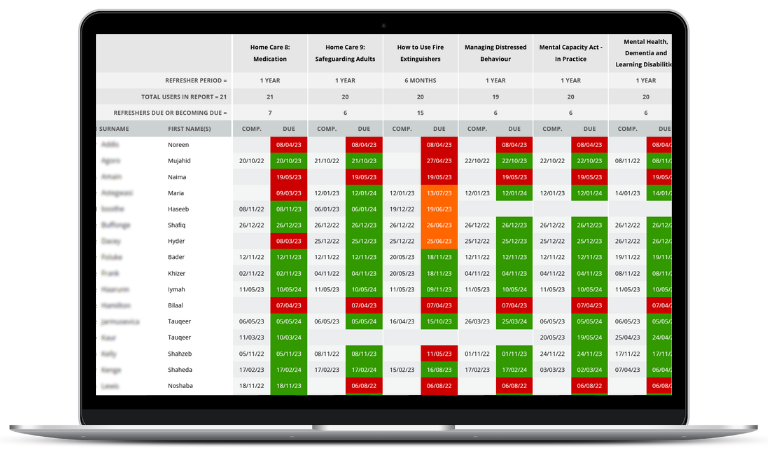
Training Matrix


Mandatory Training in England

Mandatory training is a vital part of ensuring safe, effective care in England. Health and social care workers are expected to complete induction and refresher training that meets legal requirements, CQC expectations, and service-specific risks.

Click below to learn more about which training is legally required, how often it should be refreshed, what inspectors check, and how to evidence competence at inspection.

Pathway for Social Care

Skills for Care (SFC) has recently introduce a Care Workforce Pathway for Adult Social Care

The care workforce pathway will set out clearly what a career in social care means and the level of knowledge, experience and skills required to deliver high-quality, personalised, care and support.

It will empower people working in social care to develop themselves and their career by setting out how they can gain skills, access learning and development, and progress in their careers in a way that meets their aspirations.

 
What has been developed

Skills for Care has been working in partnership with the Department of Health and Social Care (DHSC) to develop the first part of the pathway, which focuses on staff working in direct care roles and outlines an initial four role categories:

  • New to Care
  • Care or Support Worker
  • Supervisory/Leadership
  • Practice Leader (developed in partnership with BILD)

Contained within each role category is a defined set of behaviours, knowledge and skills expected of someone to work at that level. The care workforce pathway also demonstrates how someone can develop within each category, building on their knowledge and skills to provide the best possible care to the people who receive their support.

The pathway will take time to embed, and SFC will continue to engage with the sector to identify what further assets and tools may be needed to make sure the pathway supports employers with recruitment, induction and training.

Find further information on the pathway and how it has been developed .

You can also hear more about SFC’s response to the Government’s reform package.


Learning and Development in England: Key Updates for 2025

  1. Care Workforce Pathway – Launched May 2025

The Government and Skills for Care have introduced a new Care Workforce Pathway.

What it is:

  • A national career structure that sets out the skills, knowledge, values and behaviours expected in adult social care roles from personal assistants through to registered managers.
  • A framework that shows what good practice looks like at each stage of a career in care.


Why it matters:

  • In the past, career development in care could feel unclear, with different employers having different training expectations. This pathway brings consistency across the sector.
  • It helps staff see a clear route for progression, so they know what training and experience will help them move forward in their careers.
  • For employers, it makes planning recruitment, induction, supervision and ongoing training easier and more structured.
  • Ultimately, it raises standards of care by making sure everyone is working towards the same expectations.

CareTutor’s courses align with the new pathway, helping staff progress clearly while giving employers structured training and evidence for compliance.

Read more on GOV.UK & The Care Workforce Pathway


  1. Digital Social Care Records (DSCRs) – April 2025 Update

According to GOV.UK:

  • By April 2025, 77.3% of CQC registered care providers were using Digital Social Care Records (up from 66.8% in 2024).
  • 86% of people receiving care now have a digital record in place.


What it is:

  • A Digital Social Care Record is an electronic version of a person’s care record, replacing paper files.
  • It brings together important details about the care someone receives, making it easier to access and share safely.


Why it matters:

  • For care staff: It means up-to-date information is available instantly, helping staff deliver safer, more consistent, person-centred care.
  • For managers: DSCRs allow better tracking of care quality and help provide evidence for inspections and audits.
  • For training: They open up opportunities for data-driven learning and development, for example, training can be linked to the real needs and trends shown in the records.
  • For people receiving care: It reduces duplication, improves communication between services, and helps ensure care is properly tailored to the individual.

Our training builds staff confidence with digital systems and provides audit-ready records to support CQC inspections and better care outcomes.

Read more: Putting it on (digital) record – Social care & Digital record systems: achieving good outcomes for people using adult social care services – Care Quality Commission


Together, these changes mark a turning point for health and social care in 2025:

  • The Care Workforce Pathway sets out a clear and consistent career structure for staff.
  • The growth of DSCRs provides the digital tools that support learning, evidence compliance, and improve care delivery.

Both developments are about raising standards, supporting staff, and making sure people who use services get the best possible care.

Pathway by CareTutor
Care Sector Information - England | CareTutor | Social Care eLearning

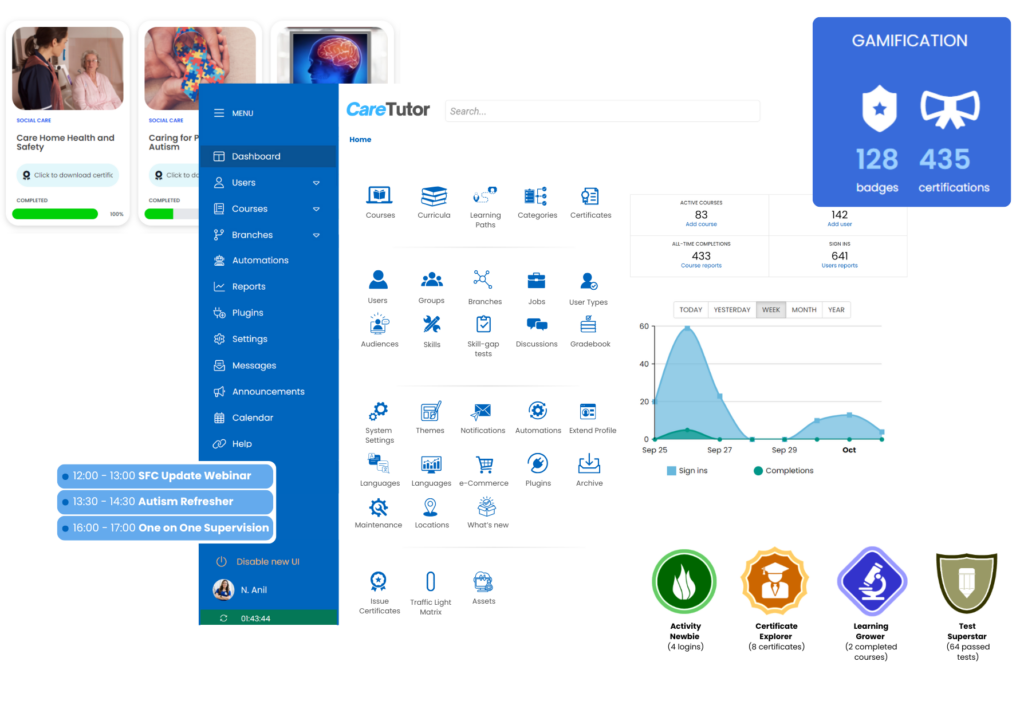
Our New Enterprise Level LMS

Includes Exciting Features Like: 
  • Infographics
  • Customised Branding
  • Full API connectivity
  • Microlearning
  • Custom Reports
  • Connect to HR platforms
  • Learning paths
  • Unique URLs
  • Gamification
  • Translation to 70+ Languages
  • Auto Enrolment
  • Groups of courses
  •  Unlimited Branches

          And a Lot More!

To support care professionals upskill and care managers follow the right standards, CareTutor has introduced a feature packed and fully customisable Learning Management System – Pathway.

Get in touch to learn more about our Pathway LMS 

As trusted by

As trusted by

Sign up for offers

Join our mailing list and stay up-to-date on our news, access free resources and receive special offers.