
TeamTalk - Team Learning Toolkit
Access any of our 5 FREE TeamTalk Sessions
Struggling to deliver and evidence Team Learning?
Run team sessions that create real inspection evidence
TeamTalk is a great new toolkit for delivering and evidencing reflective learning in team meetings, team training sessions and in supervisions. The sessions are all based around video scenarios creating discussion points and learning points on an issue or subject you want your team to focus on. These 5 free sessions will give you a taste of the toolkit so you can see how the sessions work. We are also offering a free 45-day trial to all the sessions in the toolkit, which is being added to every week, in return for feedback on the sessions you use to help us improve the toolkit.
Click here to download the guide
TeamTalk
Share. Learn. Reflect. Evidence.
A quick guide for managers and facilitators
What is TeamTalk?
TeamTalk is a toolkit which contains 60+, soon to be 100+, short, facilitator-led reflective learning sessions, based around video scenarios designed for adult social care teams.
It is intended to support day-to-day learning in a practical, accessible way. TeamTalk is not a replacement for eLearning, formal training, supervision, or competency assessment. Instead, it is designed to sit alongside them and help staff reflect on key issues, discuss real practice, and apply learning in the workplace.
Each TeamTalk session is built around a focused topic and is designed to encourage conversation, shared learning, and safe, person-centred practice.
Topics covered will include Medication Safety, Communication, Safeguarding, Raising Concerns, Mental Capacity, Infection Prevention and Control, Falls Prevention, Moving and Handling, Care of people with conditions such as Dementia, Learning Disabilities, Parkinson’s Disease, Autism, Epilepsy, and more. New sessions will be added every month.
Why use TeamTalk?
- Turns team meetings, handovers, supervisions, or briefings into meaningful learning opportunities.
- Uses short video-based micro-learning sessions that are easy to run in busy care settings.
- Supports reflective discussion about real practice, risk, and good care.
- Helps create simple evidence of attendance, reflection, and agreed actions.
- Supports a stronger learning culture and useful inspection conversations.
When to use TeamTalk
| What is included
|
How to run a TeamTalk session
- Prepare – Open the video and session guide before the session starts. Check you can play the video and have the session record ready.
- Introduce the session – Tell the team the session title and aim. Explain that the focus is on discussion and reflection, not testing people.
- Use the video in the way set out in the session guide – Some TeamTalk sessions use one video clip with discussion before and after. Others may use shorter video sections with pause points between them. Follow the session guide for that topic.
- Facilitate the discussion – Use the worksheet questions. Encourage staff to notice what is happening, what concerns them, what good practice looks like, and what they would do next.
- Summarise the key learning – Recap the learning points and agree any practical actions as a team.
- Complete the session record – Record the date, topic, facilitator, number attending, and any key reflections or agreed actions.
Facilitation tips
- Keep the session practical and focused on day-to-day care.
- Encourage everyone to contribute, but do not force anyone to speak.
- Avoid turning the session into a lecture. Your role is to guide the discussion.
- Use real examples from practice where appropriate, without naming people unnecessarily.
- Keep the conversation respectful and bring it back to safe, person-centred care if it goes off track.
What good facilitation looks like
- Keep it short, calm, and inclusive.
- Use the worksheet prompts and allow the team to think before you add your own view.
- Focus on what staff can apply in practice straight away.
What TeamTalk is not
- It is not a replacement for eLearning, formal training, or practical competency assessment.
- It is not designed to cover every detail of a topic in one session.
- It is not about catching staff out. It is about helping teams reflect, discuss, and improve together.
Keep it simple: a short, honest discussion about real practice is more valuable than trying to cover everything.
TeamTalk Sessions
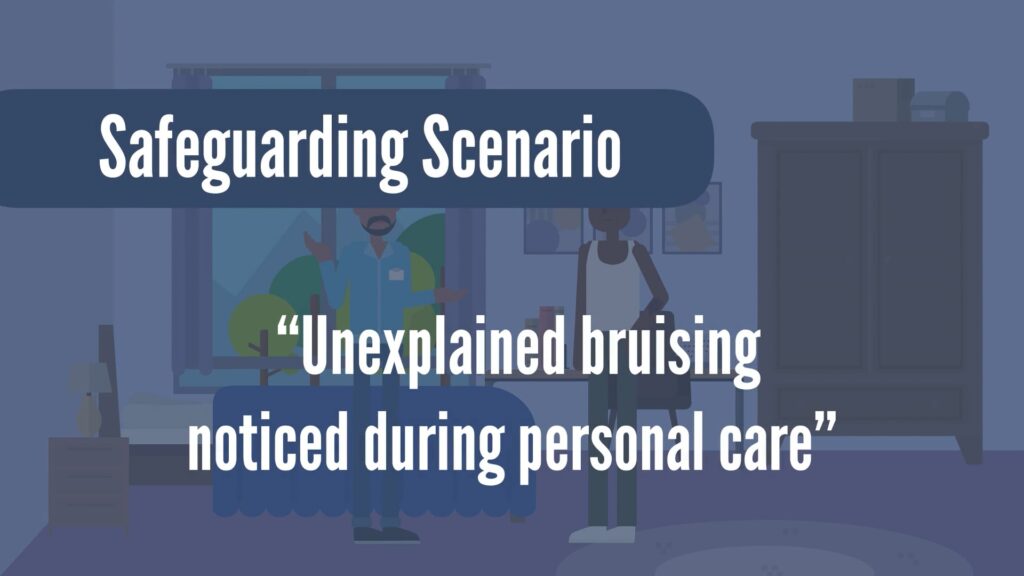
Safeguarding – Unexplained bruising noticed during personal care
Session Aim: To help staff recognise that unexplained bruising may be a safeguarding concern, understand the risks of dismissing it too quickly, and know what safe action looks like.
Video description: This short scenario shows a care worker noticing bruising on a resident’s arm during personal care. A colleague dismisses the concern, and nothing is done at first. The later part shows what good practice looks like when unexplained injury is taken seriously.
Duration : 10-12 minutes
Session Guide and Session Log included
Moving and Handling – Using Hoists Safely and Effectively
Session Aim: To help staff understand how to use hoists safely and effectively, why checks and communication matter, and how good practice can support both safety and dignity.
Video description: This video demonstrates safe and effective use of hoists when supporting individuals with mobility needs. It highlights correct techniques, safety checks, and communication to ensure dignity and reduce the risk of injury to both the person and staff.

Duration : 12-15 minutes
Session Guide and Session Log included
Mental Capacity Act – Staff assume the person lacks capacity because of their diagnosed condition
Session Aim: To help staff understand that a diagnosis does not automatically mean a person lacks capacity, and that decisions must not be made on assumption alone.
Video description: This short scenario explores a common safeguarding concern where assumptions are made based on diagnosis rather than an individual’s ability to make a specific decision at a specific time. It reinforces the principle that every adult has the right to be supported in making their own decisions wherever possible.

Duration : 10-12 minutes
Session Guide and Session Log included
Medication Safety – Resident Appears Unwell
Session Aim: To help staff recognise a clear change in a resident’s usual alertness, understand what could happen if concerns are not acted on, and discuss what safe practice looks like.
Video description: This short video explores a safeguarding concern involving a potential medication error, where a resident appears unusually drowsy or over-sedated following administration. It highlights the importance of early recognition and prompt action to ensure the resident’s safety and wellbeing.

Duration : 12-15 minutes
Session Guide and Session Log included
Infection Control – Effective Hand Hygiene
Session Aim: To help staff understand when handwashing is needed, when alcohol hand rub may be appropriate, and why effective hand hygiene is essential to safe care.
Video description: This short video explores the importance of effective hand hygiene in infection prevention and control. It highlights how proper handwashing techniques reduce the spread of infection and protect both residents and staff.

Duration : 12-15 minutes
Session Guide and Session Log included
Want a free trial of the full toolkit?