
Over 20 years experience of training in the care sector
Call us on
020 3129 5667
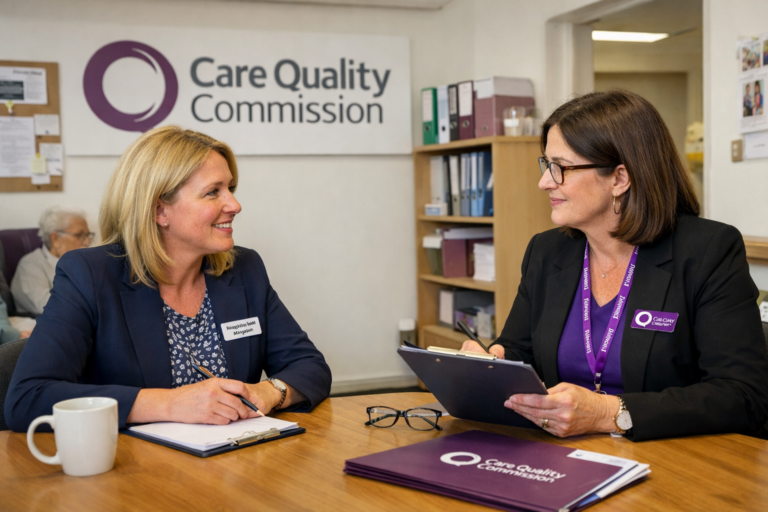
How to prepare with confidence, evidence and a clear understanding of what CQC expects
Becoming a registered manager is a significant professional step. It is not only about experience in care. It is about showing the Care Quality Commission (CQC) that you understand your responsibilities, can apply the regulations in practice, and are ready to lead a safe, effective and well-led service. CQC states that, as part of the registration process, it may ask for further information, interview applicants by telephone, online or face-to-face, and in some cases visit the service as part of its assessment.
At the heart of this is Regulation 7. CQC says a person cannot manage a regulated activity as a registered manager unless they are fit to do so, including being of good character and having the necessary qualifications, competence, skills and experience.
So while many people still call it the “fit person interview”, the real issue is broader than a single conversation. CQC is assessing whether you are ready to take legal and leadership responsibility for the service in practice.
What CQC is really assessing
A strong candidate does more than recite policies. CQC’s assessment framework is built around five key questions: whether services are safe, effective, caring, responsive to people’s needs and well-led. CQC says these sit at the centre of how it assesses quality.
In an interview or registration discussion, that usually means showing that you can:
The strongest answers are usually specific, practical and rooted in real experience rather than theory alone.
Start with Regulation 7 and your legal responsibilities
Before anything else, be clear on what CQC expects from a registered manager. Regulation 7 is not just about having a job title. CQC’s guidance says the registered manager must be fit, of good character, able to perform the role and have the qualifications, competence, skills and experience needed for the regulated activity.
It also helps to remember that registered managers are registered persons with legal responsibilities under the Health and Social Care Act 2008 and associated regulations. CQC inspection pages routinely describe the role in these terms.
That means your answers should show not only knowledge, but ownership. CQC is not assessing whether your provider has good policies on paper. It is assessing whether you understand your own role in leading and governing the service.
Know the five key questions and what they mean in practice
CQC’s assessment framework says all services are judged through the five key questions. These are not abstract headings. They are the practical lens through which good care is understood and assessed.
A good candidate should be able to explain them simply in practice:
This matters because many interview questions link back to these themes, even when they are framed as scenarios.
Be ready to explain consent and the Mental Capacity Act clearly
Consent is one of the areas candidates must be able to explain with confidence. CQC’s Regulation 11 guidance says care and treatment must only be provided with the consent of the relevant person, unless lawful authority exists where the person lacks capacity. It also says providers must obtain consent lawfully and ensure the person seeking consent understands the care or treatment involved.
That means you should be ready to talk about:
Good answers here tend to be calm, clear and practical. CQC is looking for lawful, person-centred thinking, not jargon.
Safeguarding must be more than a policy
Safeguarding is another core area. CQC’s registration guidance for supporting documents says providers must have safeguarding policies and procedures which include how concerns can be raised and escalated, including concerns about management.
CQC’s notification guidance is also clear that providers must tell CQC about abuse or allegations of abuse concerning a person using the service.
So you should be able to explain:
Stronger candidates usually sound decisive here. They show that safeguarding is about action, culture and accountability, not simply knowing the right words.
Governance and oversight are central to interview success
Many registered manager interviews come back to one basic question: how do you know your service is safe and well-led?
CQC’s wider regulations guidance describes the fundamental standards as the standards below which care must never fall. Governance is part of how those standards are maintained in real life.
That means you should be ready to explain:
It is not enough to say “we do audits”. A strong answer explains what gets checked, what happens when something is missed, and how learning is embedded.
Understand Duty of Candour properly
Duty of Candour is another area where weak answers often become too broad. CQC says the duty requires providers to act in an open and transparent way and explains that Regulation 20 defines notifiable safety incidents and how the duty applies when those incidents occur.
CQC also says its role is to regulate the provider and ensure it is fulfilling all aspects of the duty, while the provider remains responsible for identifying and responding to notifiable safety incidents.
So your answer should show that you understand Duty of Candour is not just “being honest” in a general sense. It means:
That usually lands better than vague statements about openness.
Leadership and culture still matter in every answer
Even where the question sounds technical, CQC is still assessing leadership. The assessment framework is built around people’s experience, safety, quality and leadership across the five key questions.
That is why it helps to be ready to talk about:
The strongest candidates do not sound rehearsed. They sound reflective, proportionate and grounded in real leadership.
How to prepare well
The best preparation is not memorising scripts. It is revising the regulations and then linking them to real examples from your own practice.
Before your interview, make sure you can talk confidently about:
It is also worth preparing a small bank of real examples, such as a safeguarding concern, a governance issue you improved, a difficult staffing decision, or a change you introduced that made care safer or more person-centred.
How leadership development can support interview preparation
Preparing for registration is not only about passing an interview. It is also about becoming the kind of leader who can manage the role well once registered.
Skills for Care’s licensed learning programmes are designed specifically for adult social care leaders and managers. Skills for Care describes Lead to Succeed as helping individuals develop leadership and management potential and put it into practice, Well-led as a practical leadership development programme for registered managers and other managers, and Leading Change Improving Care as a programme focused on influencing and implementing change in adult social care.
That is why these programmes can be highly relevant for providers developing future registered managers, newly appointed managers preparing for registration, or existing leaders wanting to strengthen their confidence around governance, culture, leadership and service improvement.
CareTutor’s leadership programmes
At CareTutor, we offer Skills for Care leadership programmes because they support the real demands of leadership in adult social care. Our programmes are designed to help managers build practical confidence around leadership, supervision, governance, improvement and leading teams well.
Our leadership offer includes:
For care providers, these programmes can support succession planning, management development, stronger leadership practice and better preparation for the realities of regulated care.
Why quality assurance matters
Leadership development should not just sound good in a brochure. It should be backed by recognised quality standards.
CareTutor holds QACLS status, giving employers added confidence in the quality of our leadership training offer. Skills for Care says the Quality Assured Care Learning Service is designed to review the quality of courses and qualifications delivered by training providers, set a benchmark for quality training delivery, and support employers to make informed choices.
Final thought
A CQC registered manager interview is not about delivering polished textbook answers. It is about showing that you understand your legal responsibilities, can lead with sound judgement, and are ready to run a service that is safe, effective, caring, responsive and well-led.
If you are preparing for registration, or developing managers within your organisation, the right leadership development can make a real difference, not only for interview confidence, but for day-to-day practice once the role begins.
Develop confident care leaders with CareTutor
CareTutor delivers practical Skills for Care leadership programmes for adult social care managers and leaders, including Lead to Succeed, Well-led and Leading Change Improving Care.
If you are preparing a new manager for registration, strengthening your leadership team, or planning manager development across your service, we can help.
👉 Reach out to discuss your leadership development needs.