
Over 20 years experience of training in the care sector
Call us on
020 3129 5667
If you are a registered manager, nominated individual, or owner of a care service, you may have seen recent announcements about changes to the CQC inspection framework.
CQC has confirmed it is moving towards a more sector-based approach to regulation, with draft sector-specific frameworks now published for feedback. For adult social care providers, this is an important moment to pause, understand what is changing, and consider what it could mean for inspection readiness.
The key point: the framework has not changed yet
Having reviewed CQC’s latest updates, the most important message is simple: change is coming, but the current framework is still in use.
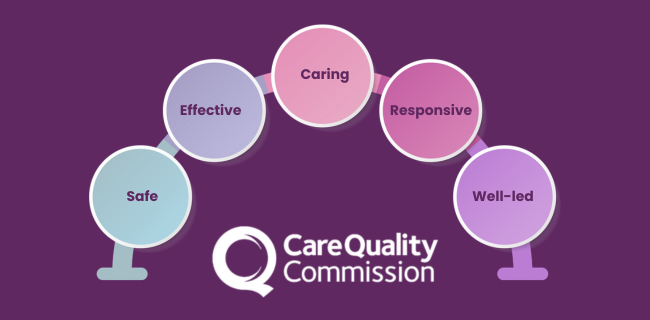
CQC continues to assess providers using:
Those five key questions remain central:
Many providers may assume the framework has already changed, but it has not. Inspection preparation should still be based on the current model.
CQC has published four draft sector-specific frameworks covering adult social care, mental health, primary care, and hospitals. These are open for feedback until 12 June 2026.
This shift reflects feedback that a single framework felt too generic and did not always reflect the realities of different care settings.
For adult social care, the proposed framework is more aligned with day-to-day practice. It focuses on areas such as safety, staffing, care delivery, leadership, and improvement, all of which will feel familiar to registered managers.
A clearer, more practical approach to assessment
One of the most significant proposed changes is how services may be assessed and rated.
CQC has suggested:
This matters because many providers found the previous scoring system difficult to interpret. A clearer approach should make it easier to understand what good looks like, and where improvement is needed.
What this means for smaller providers
For smaller services, this direction of travel could be positive.
Many providers do not have large compliance teams, so they need expectations that are:
A more tailored CQC inspection framework may make it easier to translate regulatory expectations into everyday practice. However, it is important to remember that the draft frameworks are still being tested, so major changes should wait until the final version is confirmed.
A stronger focus on equity and culture
A notable feature of the draft adult social care framework is its increased emphasis on equity and culture.
This includes:
Inspection readiness is therefore no longer just about policies and audits. It is also about understanding lived experiences, both for people using the service and for staff.
While the structure of the CQC inspection framework may evolve, the fundamentals remain the same.
The fundamental standards still underpin regulation, and providers are still expected to deliver:
The wider context: more inspections
Alongside these proposed changes, CQC is increasing its inspection activity.
Recent updates show:
This means inspection readiness remains just as important now as any future changes.
The most effective approach is to balance current compliance with future awareness.
Continue working to the current framework, but start preparing for what’s coming.
Focus on:
In smaller organisations especially, inspection outcomes often reflect how well good care is understood, evidenced, and communicated.
The latest updates to the CQC inspection framework are not a reason to panic, they are a reason to get organised.
The providers most likely to succeed will be those who:
Reflective learning and inspection readiness
Reflective learning is becoming an increasingly important part of inspection readiness. It is no longer enough for staff to simply complete training — services must be able to demonstrate how learning is discussed, understood, and applied in practice.
Inspection reports often highlight this clearly:
These examples show a consistent theme: it’s not just about training, it’s about evidencing learning and improvement.
This is where structured approaches to team learning become essential.
CareTutor’s TeamTalk helps providers turn everyday meetings into meaningful, evidence-based reflective learning sessions.
TeamTalk supports services to:
Designed for care homes, home care, and supported living, TeamTalk provides a practical way to embed reflective learning into:
👉 Sign up for a free weekly team learning session from our TeamTalk catalogue
Need support with inspection readiness?
CareTutor provides practical health and social care training designed for real-world adult social care settings.
Visit www.caretutor.org or contact info@caretutor.org to find the right training solution for your organisation.