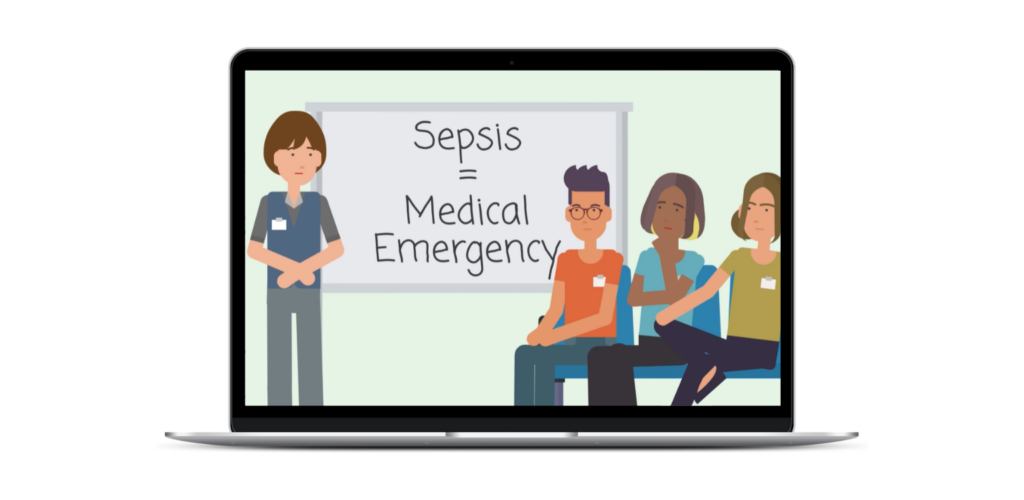
This CPD-accredited Sepsis Awareness course helps care staff recognise sepsis early and act quickly. Learners will understand what sepsis is, who is most at risk, how to spot red flag warning signs in adults, children and infants, and what to do if they suspect sepsis, including clear escalation and structured communication using SBAR.

By the end of this course, learners will be able to:
- Explain what sepsis is and why it is a medical emergency.
- Identify who is at higher risk of developing sepsis.
- Recognise key red flag warning signs in adults, children and infants.
- Take immediate, appropriate action and follow local escalation pathways.
- Communicate concerns clearly and confidently using SBAR.
- Explain how infection prevention and control (IPC) reduces sepsis risk.
Featured CareTutor Learner Review

Overview
This online training course has been designed specifically for Care and Support Workers working in a social care setting. It may also be useful to a wider audience of people who would like to know more about Caring for People with Sepsis.
- What sepsis is and how it can develop rapidly from common infections
- Higher risk groups (for example infants, older adults, immunosuppressed people, and those with long-term conditions or recovering from surgery)
- Recognising red flags in adults (for example sudden confusion, fast breathing, mottled or cold skin, low urine output)
- Recognising red flags in children and infants (for example floppy or very difficult to wake, not feeding, high-pitched cry, convulsions)
- What to do if you suspect sepsis, including urgent escalation and when to call 999
- Using SBAR to structure emergency calls and handovers
- Preventing infection through strong IPC practice, including hand hygiene, correct PPE use and safe care routines
- Short videos, interactive tasks, knowledge checks, and a final assessment
Approx. 30 to 45 minutes, including videos, interactive tasks, and knowledge checks (may vary by learner).
This course supports:
- Early recognition and rapid escalation of deterioration in health and social care settings
- Safe, timely communication and escalation using structured reporting (SBAR)
- Infection prevention and control expectations, including hand hygiene and correct PPE use
- Accurate record keeping and clear handover of concerns
- Safer care across care homes, home care and supported living, suitable for induction or refresher training

Toby Williamson
Toby works in the fields of adult and older people’s mental health, dementia, mental capacity and safeguarding. As a consultant he has done social research, education, training, policy work and organisational development for a range of organisations including the Alzheimer’s Society, Brent Museum & Archives, Centre for Mental Health, Dementia UK, Independent Age, Lewisham & Greenwich NHS Trust, Race Equality Foundation, Skills for Care, the Welsh Ambulance Service NHS Trust and the University of West London.
Course Preview