
Over 20 years experience of training in the care sector
Call us on
020 3129 5667
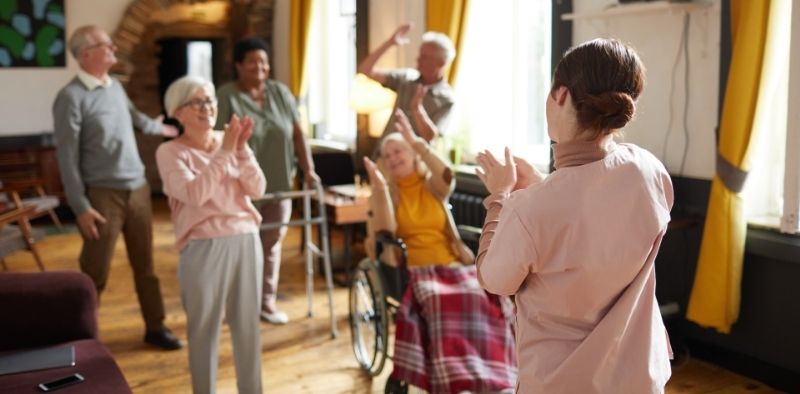
Inclusive group activities are designed so that every resident can participate meaningfully, regardless of mobility, cognition, sensory needs, or cultural background. NICE guidance (NG32) emphasises that older people in care homes should have access to a range of activities, both group and 1-to-1, that promote independence and mental wellbeing. Activities should be enjoyable, accessible, and tailored to individual preferences, ensuring everyone feels valued and engaged.
CQC Regulation 9 on person-centred care reinforces that care services must reflect residents’ needs, choices, and abilities. By designing inclusive sessions, staff can demonstrate compliance with these expectations and evidence thoughtful, personalised planning.
When planning inclusive group activities, consider the following:
Multi-level options: Offer the same activity at different levels of difficulty. For example, seated ball games for residents with limited mobility, or standing targets for those able to move independently. This allows everyone to participate safely and meaningfully.
Sensory awareness: Reduce glare, provide quiet seating, offer ear defenders where necessary, and use large-print or high-contrast instructions. This supports residents with visual or auditory impairments.
Mobility-friendly layouts: Space chairs for frames or wheelchairs, use tables with clearance, and bring activity materials to residents who cannot join the main group.
Communication support: Use visual step cards, gesture modelling, and concise, concrete instructions. This helps residents with dementia, hearing loss, or cognitive challenges follow and enjoy the activity.
Cultural inclusivity: Integrate local and international festivals, traditional foods, music, and languages to reflect the diversity of the resident community. This increases engagement and strengthens social connection.
Using NICE’s QS50 guidance on meaningful activity, staff should ensure that activities support residents’ mental wellbeing and offer opportunities for choice, control, and self-expression.
A well-run inclusive session is structured yet flexible:
Begin with a clear welcome and explanation of the session’s purpose.
Keep instructions short and simple, alternating between mental and physical focus.
Offer choices to residents where possible, for example “Would you prefer painting or collage?”
Observe participation and adapt dynamically. Move materials closer to those who need assistance, or adjust tasks for differing abilities.
End with a positive reflection and simple feedback, such as a thumbs up, sideways, or down, to gauge enjoyment and engagement.
Small adjustments, such as providing extra time, simplifying steps, or offering one-to-one support alongside group activity, can dramatically improve inclusivity. These adjustments demonstrate thoughtful person-centred care.
Inspectors expect clear documentation showing that activities are planned inclusively. Key evidence includes:
A weekly activity plan that shows options, adaptations, and resident participation.
Notes or short observations on individual engagement and mood.
Examples of how activities have been adapted for accessibility, cultural relevance, or sensory needs.
Clear links between the activity plan and Regulation 9 on person-centred care.
Including this evidence demonstrates that activities are meaningful, promote wellbeing, and support residents’ rights to participate fully in daily life.
Here are examples of activities that can be adapted for all residents:
Creative corner: Painting, collage, clay modelling, or watercolour postcards with adapted tools for different abilities.
Music moments: Sing-alongs, rhythm exercises, or using instruments that accommodate mobility limitations.
Movement activities: Seated stretching, balloon tennis, or hallway “walking bus” for mobility practice.
Reminiscence and storytelling: Pair photos, memory boxes, and music to encourage sharing and discussion.
Purposeful roles: Napkin folding, watering plants, or helping with menus to maintain a sense of contribution.
Sensory engagement: Lavender sachets, textured fabrics, or hand massages for short, restorative moments.
Regularly reviewing participation and enjoyment, while adapting activities for different needs, helps maximise engagement and wellbeing across the care home.
Staff should reference evidence-based guidance when planning inclusive group activities. For example, NICE NG32 recommends daily opportunities for meaningful activity that build independence and social connection. NICE QS50 also highlights the benefits of regular mental and physical stimulation in care homes. By integrating these recommendations, staff can ensure activities are not only enjoyable but also aligned with national quality standards.
Click below to access our full Knowledge Hub E-Book, featuring this article, related insights, and other key topics across health and social care, with links to trusted resources and official websites.
CareTutor delivers training that is fully accredited and regulator aligned.
👉 Book a free demo today.